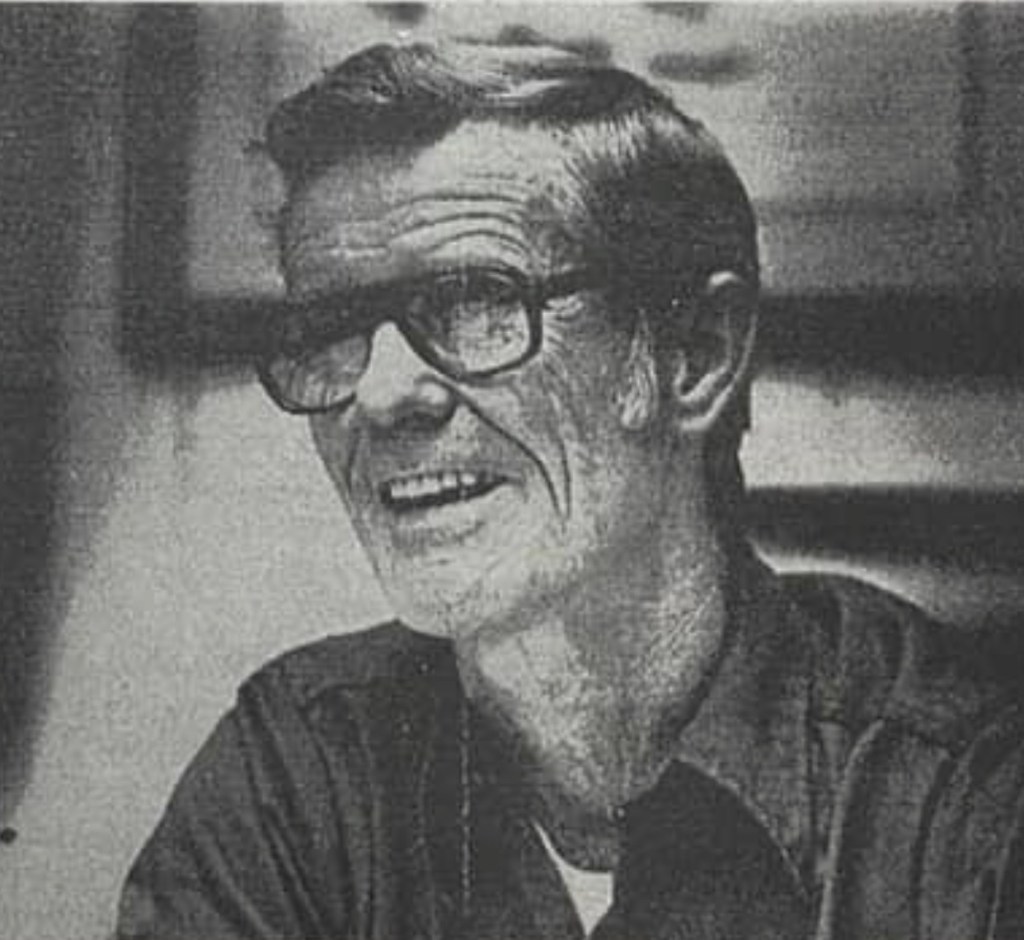
LC Herndon was my maternal grandfather and best friend every day of my life that he lived.
Everyone called him “Hey Buddy” and I was “Little Buddy.” People called him that because that was his greeting for everyone, regardless of gender, age, or degree of familiarity.
I went everywhere with him, did everything he did, and didn’t care about much anything else. I didn’t play like other kids played. I wasn’t concerned much with toys. I just wanted to do work with him.
Even after I went off to college, I would make hemp jewelry and do beadwork to sell on campus so I could buy phone cards to call him every day.
I had massive callouses on my hands for years from all the hemp necklaces, but I went to college in the era of Dave Matthews and Phish fans. Still never listened to either of them, but I identified a market to get that calling card money.
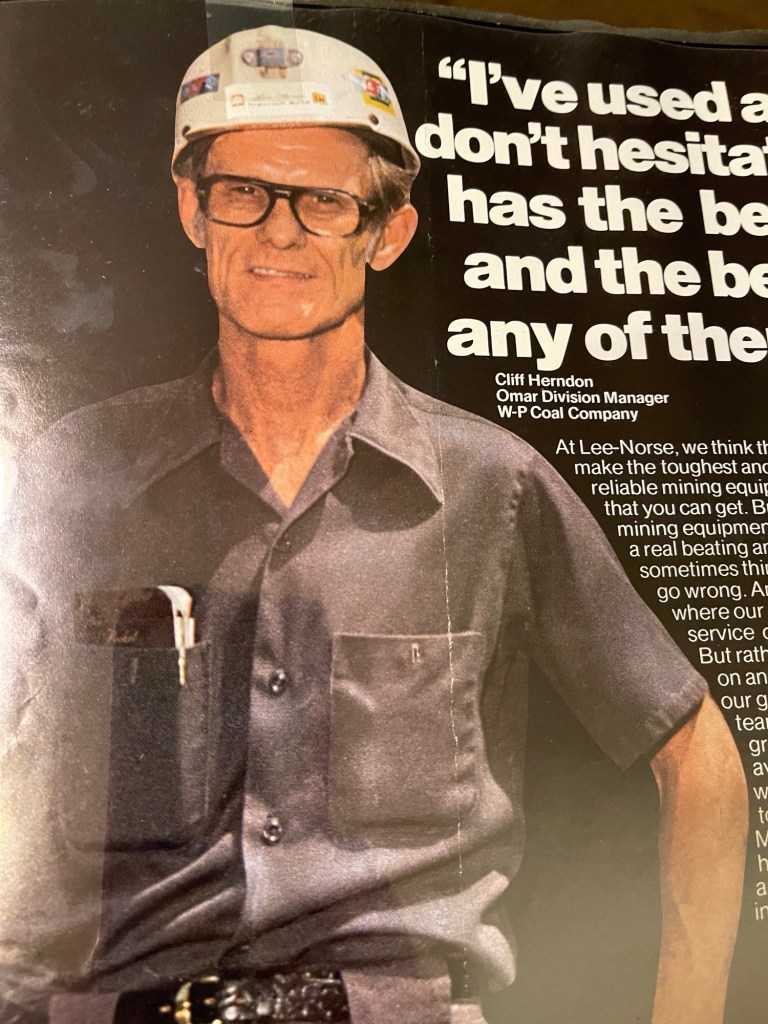
He was the ultimate proletariat union man and one of the most pivotal figures in mine safety and worker’s rights you never heard of.
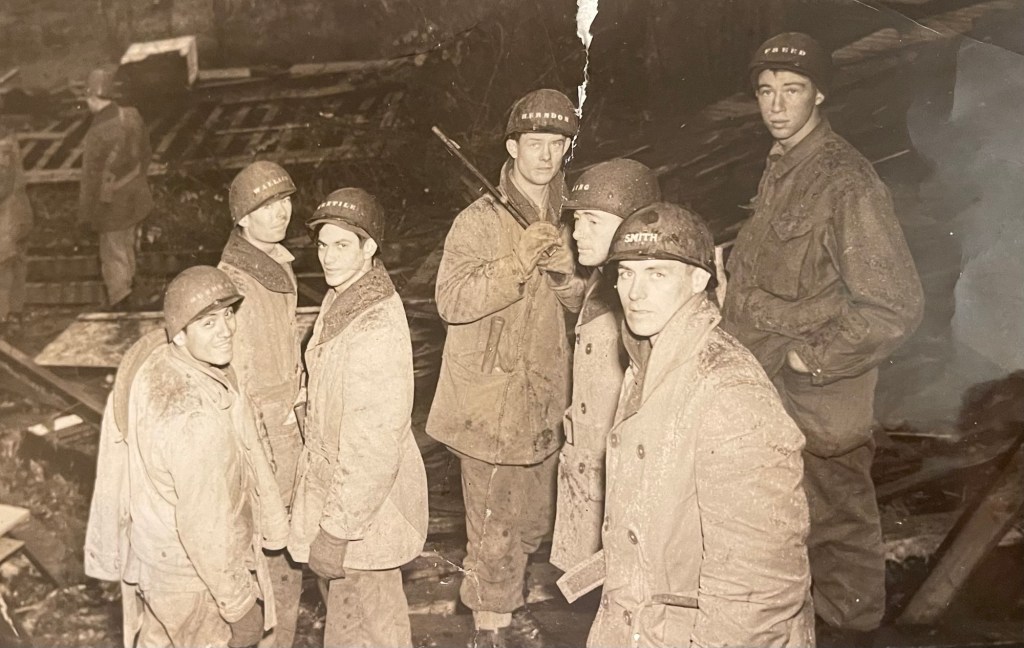
He had “made it,” having joined the service as a teenager to send money home to his family as the oldest of ten kids. He was a machinist and engineer in WW2, stationed in Okinawa.
He joined the Civilian Conservation Corps (CCC), a work relief program during the Great Depression providing employment for young men on conservation projects. Then, he worked his way up through the mines, making a considerable amount of waves.
He was not a millionaire, but he was comfortable– even though my grandmother never stopped living in the Great Depression.
Comfortable was not common in the coal camps, though, so he seemed rich to me because he was not stressing over the light bill.
When I was 7, I wanted a garden in my yard so I could grow pumpkins and watermelon. My dad was working 12-hour shifts in the mines, and breaking up the yard without a tiller would be long, slow work.
So, I told Papaw.
The next morning, my room was rumbling at 7am. I looked out the window and saw my grandfather driving a bulldozer up my yard. He took his hat off and waved it at me.
That was the day he taught me how to operate a bulldozer.
The next stunt was the time he let me take shavings off a hill, one layer at a time, with a bulldozer. We’d shave off a layer, search it for marbles, and then take off another layer.
We found 8.
When he died some twenty years later, those marbles were in the little wooden box on his dresser with other little things he had saved from our little adventures.
One time, I was getting the rotors turned on my car at this garage where I used to hang out all the time. There was an older man there who found out Cliff Herndon was my grandfather, and he started crying.
He told me that the reason his whole family was alive was because of my grandfather. He had moved to WV to get work in the mines, but mine operators only wanted to hire young men. His family and young children were living in their broken-down car.
My grandfather not only hired him but helped his family get situated. Stories like that were common for me to encounter.
He was the kind of person everyone had a story about, many of which involved otherworldly displays of hubris.
His great grandfather was Black— legally, at least, though census records sometimes record him as white. Moses Herndon. He was a freedman who is on the African American Civil War Soldiers monument in DC. I didn’t know this until I did my family tree after my grandfather had died.
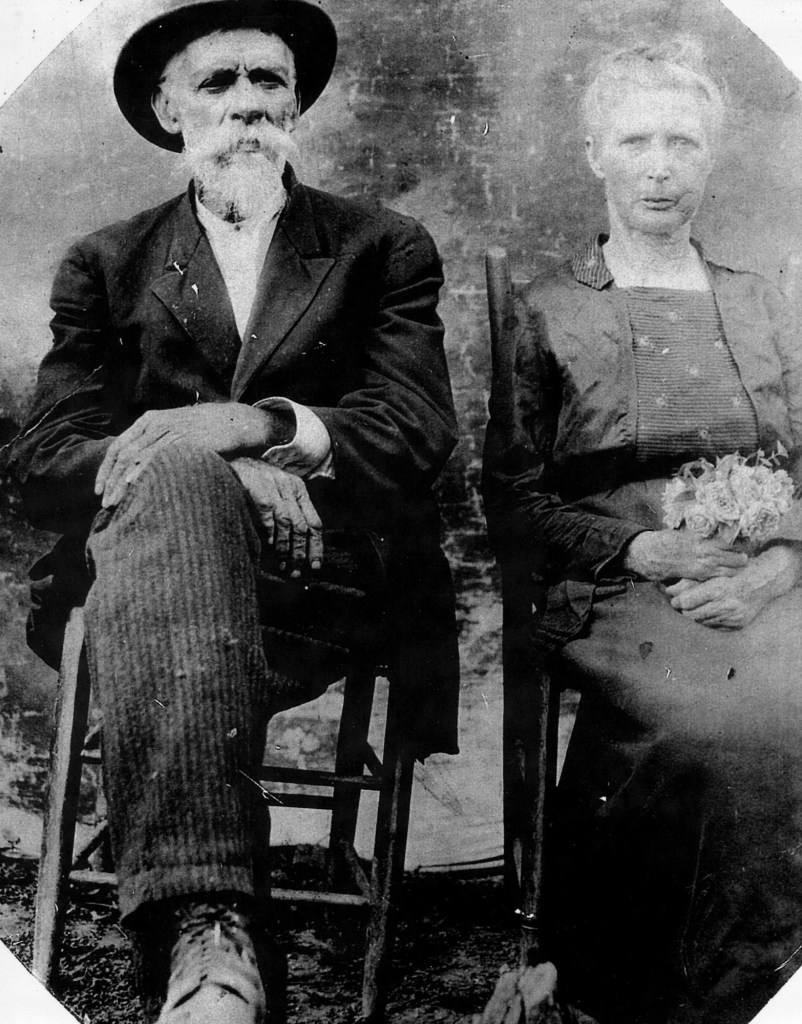
I have found a lot of ancestors who, in the paper trail, have been listed as “Colored” and sometimes “Black” or “Mulatto“ on the census without being able to track exactly why, but Herndons especially seem to be in that ethnic gray area, heavily intermarrying with other Melungeon families in the same “mystery ethnicity” boat.
Shifting racial laws regularly threw my ancestors in a pattern of abandoning their inheritance and leaving a state so they wouldn’t have to defend their rights to inherit land, work, marry, and raise their families.
Mixed Melungeon families who lived as “free people of color” often had to “own” their relatives who would have otherwise been legally required to leave the state within twelve months as a condition of their freedom.
To keep a family together, sometimes a person was enslaved on paper only. As with Moses and Noah Herndon, I believe that was the case for them. They were listed on the census like citizens but were conscripted into the Civil War as “colored troops.”
Afterward WV became a state, the Melungeons of Russell and surrounding Virginia counties began filing in to the coal camps to work where no one was asking the wrong questions.
If you had a body and were alive, you could take the 50/50 chance of dying in a mine or working the brutal timber industry for the railroad.
The majority of my ancestors lived in Russell County, Virginia, at least for a season of their lives. I believe it was a place with enough Melungeons at the court house to fix the books in favor of the people.
While for a brief time, the exodus into WV seemed like an exodus into freedom, it was not long until the coal camps became a continuation of slavery under company towns.
This was the world my grandfather inherited and bent in profound ways toward justice and labor rights.
People just needed to know who was my grandfather to immediately evaluate how they were interacting with me.
He was grit and iron, and everyone was intimidated by him, but I thought he was the warmest person in the world.
He had a strange magic when it came to working with animals. And plants. And electronics.
He could fix anything. I put this to the test, on purpose, all the time. As soon as he retired, I put him to work almost full time with projects.
When my old cabinet TV blew out, I had an idea. I wanted to remove the guts and paint the inside of it navy blue and put glow in the dark stars and a black light in it. Then, I wanted to put a fabric curtain in front of it.
Removing the guts took more work than he imagined, and he would get on a tear and start swearing and yelling. This was my favorite thing in the world, and I would laugh so hard that I thought I might literally die from it.
My laughter would exacerbate his rants, and he’d ham it up extra. He saw that project all the way to the end, and my grandmother made me a curtain for my weird cabinet idea.
Another time, I hatched a chicken in an incubator, and he moved my grandmother’s furniture out out of the dining room to let me raise it indoors for a while (he was two houses away). This yellow chick turned out to be a freakishly large rooster.
I named my rooster Union Carbide.
When I was in college, I would come back during the summers and winter break and work at Logan’s new Walmart. It had the highest rate of shoplifting of any Walmart, so I heard.
I worked in the one hour photo lab.
Let me tell you– there’s very little anyone can say or do that can surprise me after working in Logan County, WV’s one hour photo lab.
My cousin came in one day all excited. He had one of those motion-activated cameras set up in the woods. I’m from generations of hunters, and this was (at the time) high-tech scouting.
My cousin was so excited that his camera had gone through a whole roll of film. He was hoping to see a bar (a bar is a bear in WV).
It was not a bear.
It was a bare.
A bare ass.
The bare ass of my grandfather, who found the camera deep in the woods and decided to dance, pee, and moon the camera so as to leave a surprise for the lucky owner of the camera.
When he died, I lost my own courage and hubris for a while. I had not realized how much my imagined fearlessness was really knowing someone like him could bail me out if I needed it.
He was also the last of the staunch Left in my family, other than me. WV’s Boomer generation largely had left the Old Ways.
He used to talk to me about “our kind.”
This was not about family, race, or heritage, but about how we thought and our values. This did not apply to all of our family members. I didn’t ask what he meant, because I knew. We were wired similarly, and differently from most people.
He did everything in the vein of fairness and honesty. I don’t even think he could stomach forcing himself to lie. He was stubborn as an ox but would always admit if he was wrong.
We went deep into communication. He got loud every time he discussed politics, and that scared people, but the two of us were like clash of the Titans. We agreed on most things, on the big things, but we’d split hairs so much we got to subatomic levels of deconstructing an issue.
It didn’t intimidate us to go as deep and loud and brutal into an issue until we had exhausted every possible angle.
Then it was, “Fair enough” to the person making the better point.
He got mad at me when I briefly became obsessed with freemasons and fraternal orders. That was the one subject he wouldn’t talk about, so I brought it up every day.
I had to find my own strength after he died, and that took some time.
Maybe I’m still working on it.


Leave a Reply